Automating Power BI Semantic Model Security with Fabric Semantic Link

You may be using standardized solutions like Fabric Unified Admin Monitoring (FUAM) or any other templated solution that comes with a semantic model. As part of transparency within your organization, you decided to share the insights gathered with others in the organization by adjusting the solution to apply your own security setup on top. However, …

Continue reading Automating Power BI Semantic Model Security with Fabric Semantic Link

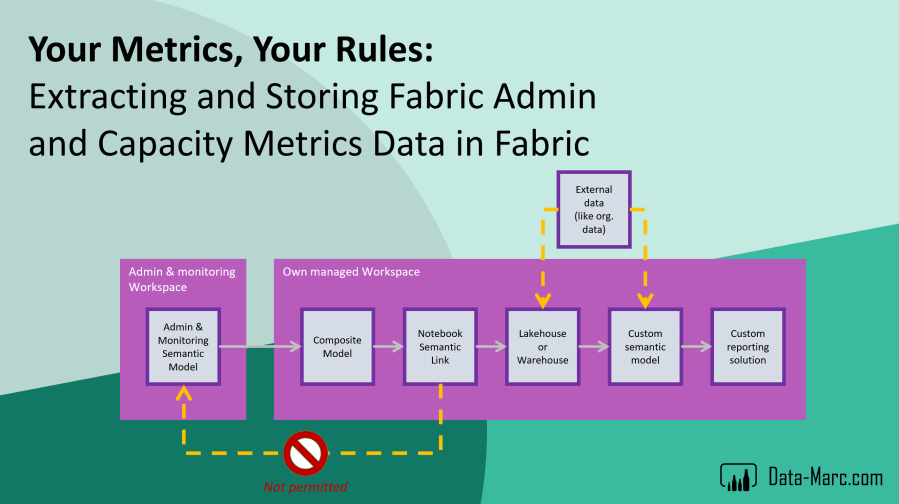
Your Metrics, Your Rules: Extracting and Storing Fabric Admin and Capacity Metrics Data in Fabric

There are loads of default semantic models and reports provided within Microsoft Fabric and Power BI. Take for example the capacity metrics, or all reports made available in the Admin Monitoring Workspace. However, all these solutions come with the same downside, being the data is available for a very short timeframe only. Capacity metrics only …

Continue reading Your Metrics, Your Rules: Extracting and Storing Fabric Admin and Capacity Metrics Data in Fabric

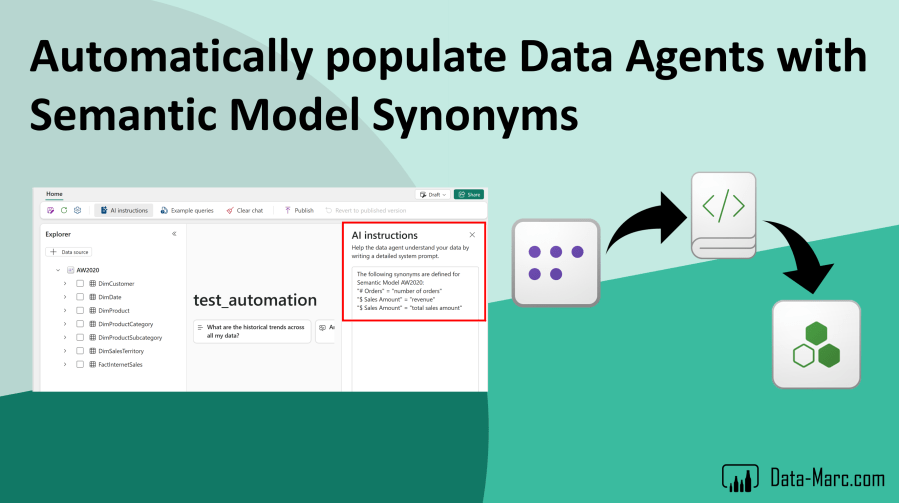
Automatically populate Data Agents with Semantic Model Synonyms

It was only yesterday, that I wrote a blog post on Semantic Models as a source for Fabric Data Agents. Not much time has passed, since I learned that Fabric Data Agents does not (always) respect the Synonyms that have been added to a Semantic Model. As a result, the Data Agent may start creating …

Continue reading Automatically populate Data Agents with Semantic Model Synonyms

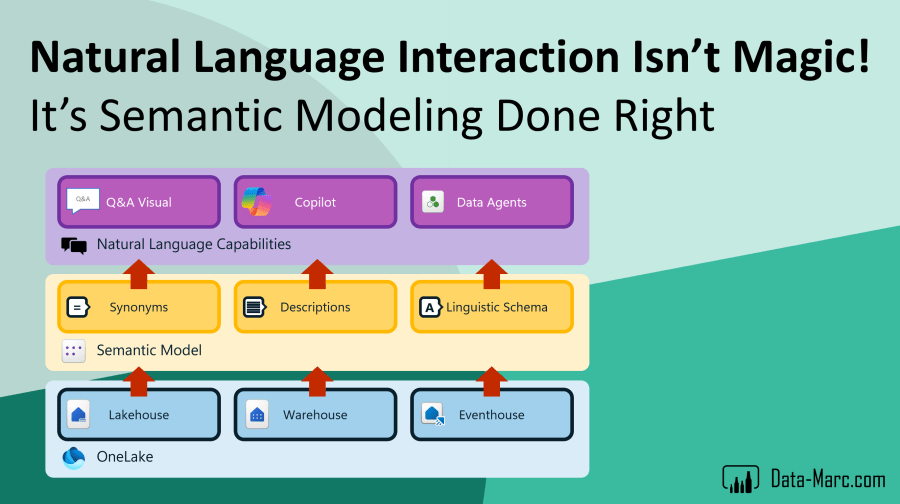
Natural Language Interaction Isn’t Magic—It’s Semantic Modeling Done Right

We’re at a point where the way we work with data is fundamentally shifting. Natural language is becoming the new interface, and tools like Microsoft Fabric are making it possible to ask questions and get answers straight from your data. One of the latest updates allow connecting Data Agents (formerly known as AI Skills) directly …

Continue reading Natural Language Interaction Isn’t Magic—It’s Semantic Modeling Done Right

Behind the Scenes: How I Automated My Fabric Workshop (training)

Last week I was running a post-conference (postcon) workshop at Fabric February in Oslo. To have a successful postcon, workspaces were needed for all attendees of the workshop. In these workspaces they had to run their exercises and explore Fabric. But setting up a bunch of workspaces by hand, assigning it to a capacity and …

Continue reading Behind the Scenes: How I Automated My Fabric Workshop (training)

The importance of monitoring – Better to allow in a controlled manner than to prohibit in an uncontrolled manner

A long time ago, I blogged about Power BI governance with topics like feature implementation in a phased approach and why you should consider to disable export to Excel. In this blog, I want to continue the governance topic with another blog about why monitoring your tenant is important! This blog will also provide you …

Continue reading The importance of monitoring – Better to allow in a controlled manner than to prohibit in an uncontrolled manner

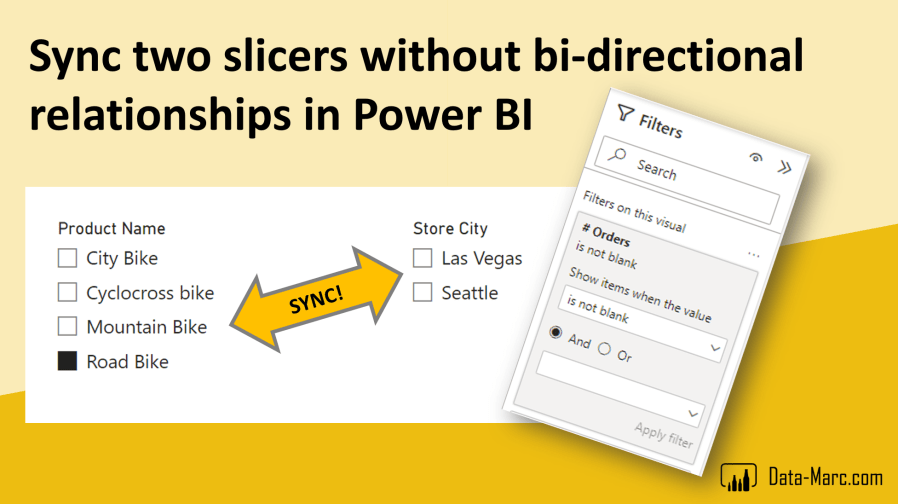
Sync two slicers without bi-directional relationships in Power BI

Have you ever wanted to sync two slicers on a report page? Even when both slicers are coming from different dimensions? A lot of users end up setting the relationships to bi-directional (both) which has huge side effects! You may up with a ambiguous data model, over filtering fact tables and wrong results. Also, there …

Continue reading Sync two slicers without bi-directional relationships in Power BI

Purchasing Fabric Capacities as Reserved Instance

Last week, I had a situation in which a client wanted to purchase a reserved instance Fabric capacity. Me being me, I assumed it would be super straight forward to purchase through Azure. However, at some point I was lost in the process where the official documentation confused even more. In the end, I figured …

Continue reading Purchasing Fabric Capacities as Reserved Instance

Comparing calculation options in Power BI, including Visual Calculations

There are tons of options in Power BI to add your custom logic. Varying from SQL expressions at data ingest all the way up to Visual Calculations to add logic on a visual level. But how do they compare to each other, where should you do what? As I've been a fan of making DAX …

Continue reading Comparing calculation options in Power BI, including Visual Calculations

Power BI and Fabric capacities: Understand the difference and cost structure

P-SKUs, A-SKUs, EM-SKUs and now we also have F-SKUs... all these different capacities that are out there today each have their own specifics. Lately, I've been in a lot of conversations around Fabric capacities. There seems to be some unclarity around what you pay for in the end and how it compares to Power BI …

Continue reading Power BI and Fabric capacities: Understand the difference and cost structure