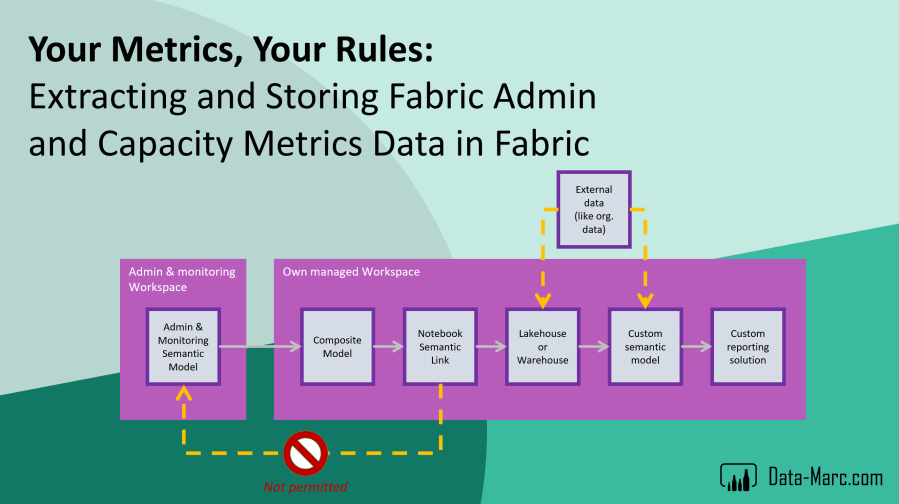
Your Metrics, Your Rules: Extracting and Storing Fabric Admin and Capacity Metrics Data in Fabric

There are loads of default semantic models and reports provided within Microsoft Fabric and Power BI. Take for example the capacity metrics, or all reports made available in the Admin Monitoring Workspace. However, all these solutions come with the same downside, being the data is available for a very short timeframe only. Capacity metrics only …
Continue reading Your Metrics, Your Rules: Extracting and Storing Fabric Admin and Capacity Metrics Data in Fabric

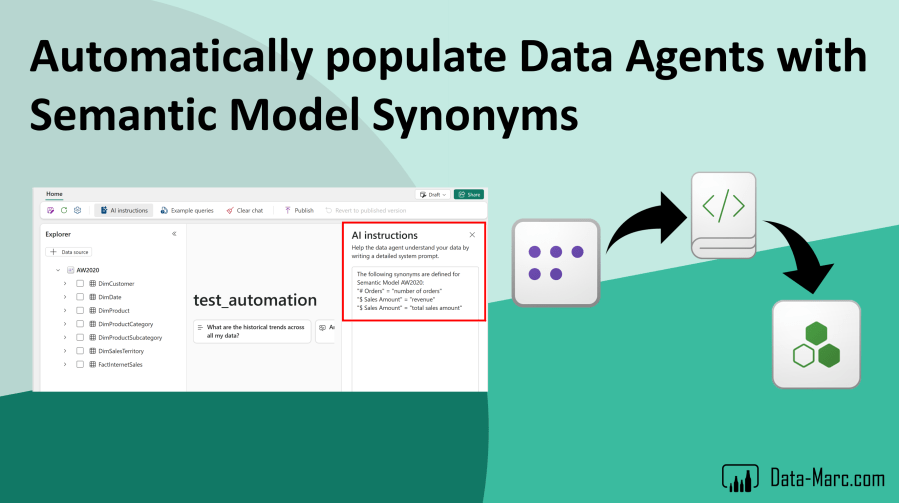
Automatically populate Data Agents with Semantic Model Synonyms

It was only yesterday, that I wrote a blog post on Semantic Models as a source for Fabric Data Agents. Not much time has passed, since I learned that Fabric Data Agents does not (always) respect the Synonyms that have been added to a Semantic Model. As a result, the Data Agent may start creating …

Continue reading Automatically populate Data Agents with Semantic Model Synonyms

Validating Azure Key Vault Access Securely in Fabric Notebooks

Working with sensitive data in Microsoft Fabric requires careful handling of secrets, especially when collaborating externally. In a recent customer engagement, I needed to validate access to Azure Key Vault from within a Fabric Notebook, without ever exposing the actual secret values. With only read access granted and no need to manage or update secrets, …

Continue reading Validating Azure Key Vault Access Securely in Fabric Notebooks

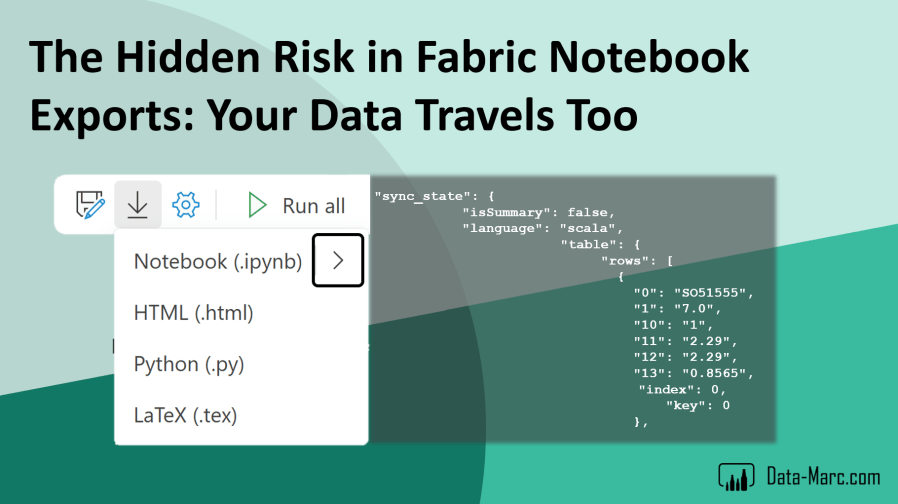
The Hidden Risk in Fabric Notebook Exports: Your Data Travels Too

When working with Notebooks in Microsoft Fabric, exporting and reusing them across environments or tenants might seem like a harmless, even convenient, task. Whether you're sharing a template with a colleague, moving assets between workspaces, or contributing to the community — the last thing you'd expect is to accidentally include data along with your code. …

Continue reading The Hidden Risk in Fabric Notebook Exports: Your Data Travels Too

Dynamically refreshing (historical) partitions in Power BI Incremental Refresh Semantic Models using Fabric Semantic Link

I've heard the question pretty often from customers: "You told me to use incremental refresh, but how can I regularly run a full load or refresh onder partitions?" Well, there are perfect ways to do this using Tabular Editor or SQL Server Management Studio. But this often includes manual work to trigger the processing. Today, …

Continue reading Dynamically refreshing (historical) partitions in Power BI Incremental Refresh Semantic Models using Fabric Semantic Link

Exploring Direct Lake Framing and warm-up data using Semantic Link in Fabric Notebooks

In the previous blog, I wrote about data temperature as part of Fabric when you're using Direct Lake storage mode. In that blog, I explained how you can get insights in the temperature of a column, what that temperature means and what the impact of the temperature is on columns that are queried more often. …

Continue reading Exploring Direct Lake Framing and warm-up data using Semantic Link in Fabric Notebooks